


Diphtheria, Crowding and lack of routine maintenance
Cases of diphtheria in Australia have been rising since October 2025, with a sharp increase from February 2026.
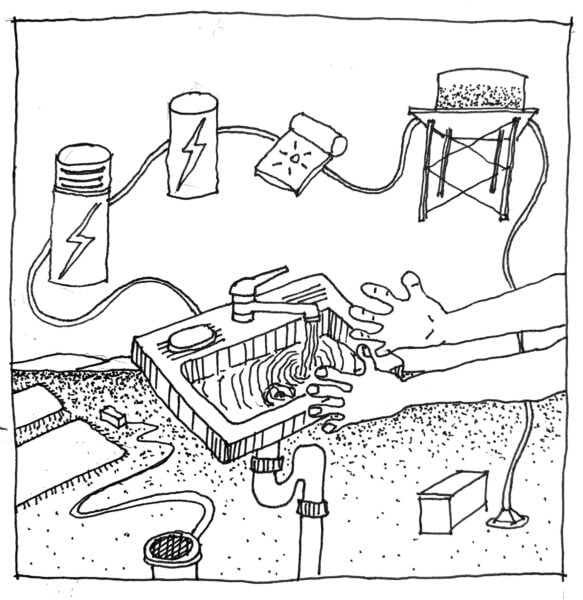
Healthabitats national data shows that hand basin hot taps are functional in only 76% of houses — meaning roughly one in four houses where someone needs to wash their hands has no working hot water at the basin. Hand washing is a critical measure to reduce the transmission of infectious diseases.
There have been 230 cases notified this year, roughly thirty times the rate recorded in the same period in recent years. The Chief Medical Officer declared it a Communicable Disease Incident of National Significance on 22 May 2026. Around 94% of cases identified since January 2026 have been Aboriginal and/or Torres Strait Islander people largely in the Northern Terriotry and Western Australia – source
The public health response has focused on vaccination — boosters are being rolled out. This doesn’t explain why this outbreak is concentrated in the NT and WA. The Aboriginal Health Council of WA has stated “long-term under-investment in the environmental determinants of health, and governments must urgently invest more in Aboriginal environmental health initiatives.” – source
The majority of cases have been cutaneous — skin infections rather than respiratory illness. Cutaneous diphtheria is more common in environments of overcrowding and poor hygiene. The bacteria spreads through close contact: respiratory droplets, direct skin-to-skin contact, and contact with infected sores or contaminated items. It spreads easily in crowded conditions.
This is precisely the environment that inadequate and poorly maintained housing creates. When more people share a house than it was designed for, and when the health hardware in that house is not functional, the conditions for ripe for transmission of the bugs that do people harm. Washing hands and wounds requires a working tap, hot water, and somewhere to wash. Healthabitats national data shows that hand basin hot taps are functional in only 76% of houses — meaning roughly one in four houses where someone needs to wash their hands has no working hot water at the basin. In 7% of surveyed houses, there is no hand basin at all. Hand washing is a critical measure to reduce the transmission of infectious diseases.
Crowding compounds every one of these deficits. A single non-functional basin in a two-person household is a practical inconvenience. The same failure in a house with eight or ten occupants — which is common in remote community housing — means one basin can end up being used by 20 people or more. This is compounded across a community, putting commercial levels of use onto residential services.
Vaccination closes the immunity gap. Fixing the health hardware closes the conditions that allow a disease like this to take hold and circulate. The two responses are not alternatives — they are both necessary, and maintenance has been consistently poorly managed for decades.