


NEWS: National Climate Risk Assessment Identifies Infrastructure Risks for Remote Communities—Current Housing Maintenance Failures Demonstrate Immediate Adaptation Needs
Australia’s first National Climate Risk Assessment, released September 2025, identifies infrastructure and built environment risks as high to very high by 2050. The assessment involved over 250 climate experts and 2,000 specialists. For remote Aboriginal communities, the NCRA reveals climate risks compounding infrastructure that’s already failing.
The assessment identifies Aboriginal and Torres Strait Islander peoples as experiencing climate impacts disproportionately through compounding vulnerabilities including water insecurity and disrupted supply chains. About one-fifth of residential buildings are expected to sit in high or very high risk zones for multiple hazards by 2050. At 3°C warming, heat-related deaths increase by 423% for Darwin and 444% for Sydney.
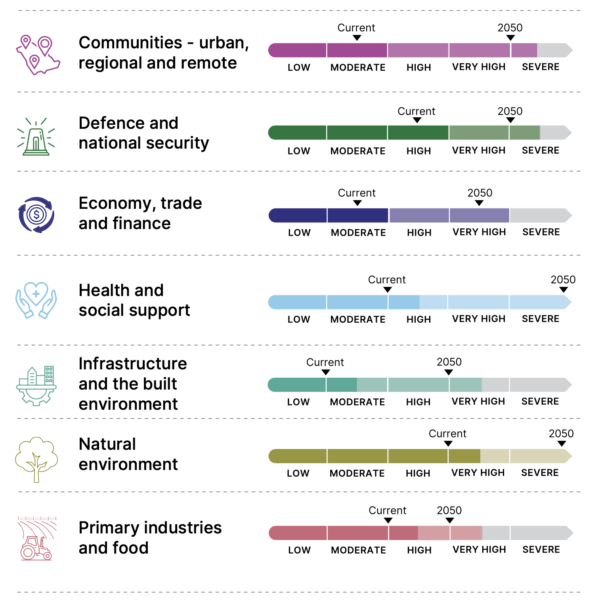
The NCRA states climate risks will push some infrastructure beyond engineering limits by 2050. But research from NT remote communities provides context the assessment doesn’t capture in detail: current housing stock is poorly maintained. Remote NT communities have among the world’s most energy-insecure dwellings due to prepayment power systems—most households disconnected more than ten times per year.
Poor maintenance means residents can’t afford to cool homes even when power is available. Failed seals, broken windows, degraded insulation increase electricity needed for thermal safety. When disconnections occur during heat, fridges can’t store medicines or food. Not all NT public housing includes air conditioning; where absent, tenants block windows to retrofit units, degrading building performance.
The NCRA models future scenarios, but housing modelling for remote communities demonstrates current designs perform poorly in existing conditions when maintenance has failed. Climate change will intensify these risks. Adaptation policy contemplating new building design for 2050 while ignoring maintenance failures of 2025 defers the assessment’s findings rather than responding to them.
The infrastructure the NCRA warns could be pushed beyond engineering limits by mid-century is already beyond functional limits in communities where basic maintenance hasn’t been delivered.